

If you’re facing overwhelming debt in Arkansas, understanding the differences between Chapter 7 and Chapter 13 bankruptcy is crucial. Bankruptcy is a legal process designed to help individuals and small business owners get relief from debt, but it comes with specific requirements and protections. This article will help you decide which option may be right for your situation.
When comparing Chapter 7 vs Chapter 13, key decision factors include your household income, whether you have regular or steady income, the types of debts you owe, your assets, and your long-term financial goals. These income factors are important in determining eligibility for each bankruptcy chapter and structuring repayment plans.
Quick Comparison of Chapter 7 and Chapter 13 Bankruptcy Chapter
|
Feature |
Chapter 7 Bankruptcy |
Chapter 13 Bankruptcy |
|---|---|---|
|
Type |
Bankruptcy liquidation (asset liquidation) |
Bankruptcy reorganization (repayment plan) |
|
Who Qualifies |
Individuals with limited income and assets |
Individuals with regular income |
|
Asset Treatment |
Non-exempt assets may be liquidated to pay creditors |
Keep assets, repay debts through a court-approved payment plan |
|
Repayment |
No payment plan; debts discharged after liquidation |
Structured payment plan with partial repayment over time |
|
Full or Partial Repayment |
Typically results in full or partial repayment through liquidation of assets |
Partial repayment of debts through a 3–5 year payment plan |
|
Repayment Period |
No repayment period; debts discharged in months |
Repayment period of 3–5 years, depending on income |
|
Court Filing Fee |
$338 |
$313 |
|
Timeline |
Typically 4–6 months to discharge debts |
3–5 years to complete repayment plan and receive discharge |
|
Impact on Home/Foreclosure |
May lose home if behind on payments |
Can prevent foreclosure by catching up on arrears during repayment period |
|
Best For |
Those seeking quick debt relief and have few assets |
Those with steady income who want to keep property and catch up on missed payments |
This table highlights the key differences between Chapter 7 vs Chapter 13, including the bankruptcy liquidation reorganization distinction, the presence of a payment plan and repayment period in Chapter 13, the court filing fees, and the typical timeline for each process.
How Chapter 7 Bankruptcy Works
Chapter 7 bankruptcy, also known as “liquidation” bankruptcy, involves the sale of a debtor’s nonexempt assets by a court-appointed trustee to pay creditors. Non exempt assets are those that are not protected by bankruptcy exemptions, and the trustee may sell nonexempt property to satisfy outstanding debts. Exempt property, such as certain personal belongings and a portion of home equity, is protected from liquidation.
The trustee’s role is to review your assets, determine which are exempt or nonexempt, sell nonexempt property, and distribute the proceeds to creditors. This process typically takes about 3-6 months from filing to discharge.
Chapter 7 is often recommended for individuals with few assets, as it can eliminate dischargeable debt quickly. It is especially effective for wiping out unsecured debts such as credit card balances, medical bills, and personal loans. Chapter 7 can also provide fast relief from collection actions such as wage garnishment.
Eligibility for Chapter 7 depends on your income and assets. If you have too much money or too much income, you may not qualify. There are restrictions on disposable income, and you must pass the means test to be eligible. Sole proprietors are also eligible to file for Chapter 7 bankruptcy.
There is a filing fee for Chapter 7, but individuals with sufficiently low income may ask the court to waive this fee.
How Chapter 13 Bankruptcy Works
In Chapter 13 bankruptcy, you propose a structured repayment plan that typically lasts three to five years. This plan is based on your disposable income—what you have left after covering necessary living expenses—and is designed to pay unsecured creditors over the life of the plan. The bankruptcy trustee collects your monthly payments and distributes them to your creditors during this period.
The court must approve your repayment plan before it goes into effect. Once you file, the automatic stay immediately halts foreclosure proceedings, repossessions, and other collection actions, giving you breathing room to reorganize your finances. Chapter 13 is often better for individuals with steady or regular income who are behind on mortgage or car payments and want to avoid foreclosure or repossession. It allows you to catch up on missed payments for secured debts like mortgages and car loans by including those missed payments in your plan.
If you have overdue car payments or car loans, Chapter 13 can help you manage them and prevent repossession. In some cases, car loans can be modified through cramdown provisions, potentially reducing the principal loan balance if the loan is older than 910 days. This flexibility can make it easier to keep your vehicle.
Legal fees for Chapter 13 may be rolled into your repayment plan, unlike Chapter 7, where fees must be paid to the lawyer. Support obligations, such as child support and tax debts, are considered priority debts. These must be paid in full through your plan and cannot be discharged in bankruptcy. If you have significant non-support debts from a divorce, Chapter 13 may allow you to discharge those, unlike Chapter 7.
There is no income ceiling for Chapter 13, but you must have a regular source of income to fund your plan. You can qualify if your total secured and unsecured debts are less than $2,750,000. If your circumstances change during the repayment period—such as a change in income—the plan may be modified with court approval to reflect your new situation.
Overall, Chapter 13 bankruptcy allows you to keep your assets while you repay debts over time, catch up on missed mortgage or car payments, and pay unsecured creditors in a manageable way, all while protecting you from aggressive collection actions.
Eligibility, Means Test, and Income Limits
Eligibility for Chapter 7 bankruptcy depends on your income level and whether you pass the means test. The means test is designed to determine if you qualify for Chapter 7 by comparing your household income to the Arkansas state median for your household size. If your household income is at or below the state median, you may qualify.
During the means test, your monthly expenses are subtracted from your household income to calculate your disposable income. Restrictions on disposable income apply—if you have too much money or too much income left over after expenses, you may not be eligible for Chapter 7. In such cases, having too much income can result in a presumption of abuse, and your case may be dismissed or converted to Chapter 13.
For Chapter 13 bankruptcy, you must have regular income to qualify, as this allows you to create a feasible repayment plan.
Means Test Step-By-Step and Calculator
First, your average monthly income is compared to the median income for a household of your size in Arkansas.
Next, your monthly expenses are subtracted from your household income to determine your disposable income. The means test imposes restrictions on disposable income—if your disposable income is too high after accounting for monthly expenses, you may not qualify for Chapter 7.
If you do not pass the means test due to these restrictions on disposable income, you may need to consider filing for Chapter 13 bankruptcy instead.
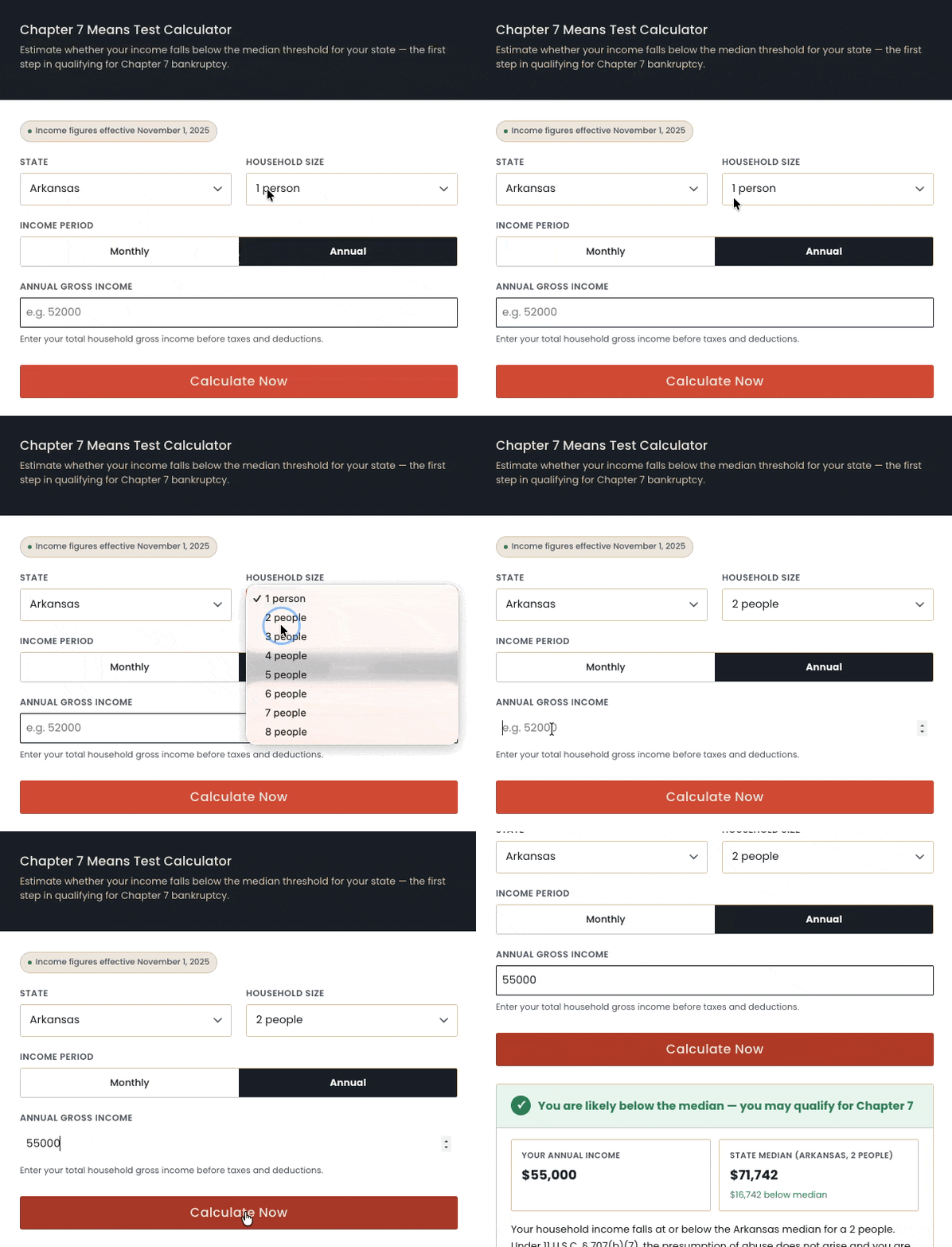
Chapter 7 Means Test Calculator
Estimate whether your income falls below the median threshold for your state — the first step in qualifying for Chapter 7 bankruptcy.
What Happens to General Unsecured Debts
Under Chapter 7 bankruptcy, most general unsecured debts—such as credit card balances, medical bills, and personal loans—are typically discharged. This means debtors are no longer legally required to pay creditors for these debts after the bankruptcy is complete. Chapter 7 is focused on helping debtors eliminate unsecured debt, providing a fresh start by wiping out obligations like medical bills and personal loans.
In contrast, Chapter 13 bankruptcy involves a repayment plan where debtors pay creditors over three to five years. The plan is structured to pay unsecured creditors—such as those holding credit card debt, medical bills, and personal loans—an amount equal to the value of the debtor’s nonexempt assets. Debtors are responsible for making regular payments to a trustee, who then distributes funds to creditors according to the plan. Chapter 13 also allows debtors to catch up on secured debts like mortgages and car loans, which cannot be discharged in Chapter 7.
It’s important to note that Chapter 13 has debt limits for unsecured debts. If your unsecured debts, including credit cards, medical bills, and personal loans, exceed the cap, you may not be eligible for Chapter 13 and might need to consider Chapter 7 or another option.
Dealing With Back Taxes and Priority Debts
Priority debts are certain obligations that must be paid in full during bankruptcy and receive special treatment under the law. These include support obligations, such as child support, and tax debts. Child support and recent tax debts are considered priority debts, meaning they cannot be discharged in either Chapter 7 or Chapter 13 bankruptcy. If you owe back taxes or child support, these debts will need to be paid in full through your Chapter 13 repayment plan, and they are protected from collection actions while your case is active. In Chapter 7, while some debts may be wiped out, child support and recent tax debts remain and must still be paid after the bankruptcy is complete.
When dealing with back taxes, it’s important to know that only certain older tax debts may be dischargeable, while recent tax debts are not. Always document any IRS communication and provide it to your attorney for review to ensure proper handling of these priority debts.
Secured Debts, Foreclosure, and Repossession
In both Chapter 7 and Chapter 13 bankruptcy, how you handle secured debts—like mortgages and car loans—can be very different. If you are personally liable for a secured debt, such as a mortgage or car loan where the collateral is in your name, you must decide whether to keep or surrender the property.
In Chapter 7, you generally must stay current on your mortgage or car payments if you want to keep the property. If you have missed payments, Chapter 7 does not provide a way to catch up on those missed mortgage or car payments. If you fall behind, secured creditors can ask the court to lift the automatic stay and proceed with foreclosure proceedings or repossession. If you surrender the property, you are no longer responsible for the debt, but if the collateral is worth less than the principal loan balance, you may still be personally liable for any deficiency unless the debt is discharged.
Chapter 13, on the other hand, offers more flexibility for dealing with secured debts. The automatic stay immediately halts foreclosure proceedings and repossessions, giving you breathing room. Chapter 13 allows you to catch up on missed payments for secured debts, such as missed mortgage or car payments, by including them in a three- to five-year repayment plan. This can help you avoid foreclosure and keep your real property, such as your home. For car loans, Chapter 13 may allow a cramdown, which can reduce the principal loan balance to the current value of the vehicle (if the loan is older than 910 days), and modify the terms of repayment. Lien-stripping may also be available for junior liens on real property if the value of the property is less than the amount owed on the first mortgage.
Secured creditors have specific rights in both chapters, but Chapter 13 provides more options to manage and modify secured debts, protect real property, and help you avoid losing your assets due to missed payments.
Asset Protection and Exemptions
Asset protection is a key concern for anyone considering bankruptcy, as it determines what property you can keep while seeking debt relief. In Chapter 7 bankruptcy, the law allows you to protect certain exempt assets—such as your primary residence, personal property, and retirement accounts—from being sold by the bankruptcy trustee. For example, the homestead exemption in Arkansas can protect a portion of your home equity, helping you keep your house even as you address your debts. However, any nonexempt assets—property that falls outside these protections—may be sold by the trustee to pay secured debts and unsecured creditors.
Chapter 13 bankruptcy offers even broader asset protection. Instead of liquidating nonexempt property, you can propose a repayment plan that lets you keep valuable assets, such as a second car or vacation home, as long as you make regular monthly payments to the bankruptcy trustee. This repayment plan is designed to pay creditors over a period of three to five years, allowing you to retain more of your personal property while working toward debt relief. Whether you file under Chapter 7 or Chapter 13, understanding which assets are exempt and how nonexempt assets are treated is crucial. A bankruptcy attorney can help you maximize your exemptions and protect your financial future.
Credit Score and Bankruptcy
Filing for bankruptcy is a major financial decision that can have a lasting impact on your credit report and overall financial future. A Chapter 7 bankruptcy will remain on your credit report for up to 10 years, while a Chapter 13 bankruptcy stays for up to seven years. During this time, your credit score may drop significantly, and you may find it more difficult to qualify for new loans or credit cards. However, the effect of bankruptcy on your credit score lessens over time, especially if you take steps to rebuild your credit.
After bankruptcy, you can start working toward a fresh financial start by making timely payments on any remaining debts, keeping your credit utilization low, and regularly monitoring your credit report for errors. While bankruptcy should be considered a last resort for debt relief, it can provide the opportunity to reset your finances and move forward. Consulting with a bankruptcy attorney is essential—they can help you understand the potential impact on your credit, explore all available debt relief options, and guide you toward the best path for your financial future. With the right support and a proactive approach, you can recover from bankruptcy and rebuild your credit over time.
When To Hire A Bankruptcy Attorney Or Bankruptcy Lawyer
It’s important to contact a bankruptcy attorney early in the process to understand your options and avoid costly mistakes. When you meet with an attorney, bring documents such as pay stubs, tax returns, a list of debts, and information about your assets.
Be sure to ask about legal fees and attorney fees during your initial consultation. Attorney fees for Chapter 7 filings typically range from $1,000 to $3,500, and these legal fees must usually be paid upfront. For Chapter 13 cases, attorney fees can cost between $2,500 and $6,000, but these legal fees may be included in your repayment plan, making them more manageable over time. Understanding these costs and when they are due is crucial as you plan your next steps.
Ask if the firm offers fixed-fee arrangements or video consultations for added convenience. To get started, schedule a free consultation with WH Law to discuss your situation and learn how we can help you through the Chapter 7 vs Chapter 13 process.
Cost, Timeline, And The Bankruptcy Process
Bankruptcy is a legal process overseen by federal courts in the U.S. that protects both business entities and individuals from overwhelming debt. Both business entities and individuals—including sole proprietors and companies—can file for bankruptcy, depending on their financial situation and goals.
When considering Chapter 7 vs Chapter 13, it’s important to understand the difference between bankruptcy liquidation and reorganization. Chapter 7 is a bankruptcy liquidation process, where a debtor’s non-exempt assets may be sold to pay creditors, and most remaining debts are discharged. Chapter 13, on the other hand, is a bankruptcy reorganization process, allowing debtors to keep their property and repay creditors through a court-approved repayment plan over three to five years.
The legal process for both chapters involves several steps. Before filing, debtors must obtain pre-bankruptcy credit counseling from a court-approved certified credit counselor. After filing, completion of a debtor education class is required for both Chapter 7 and Chapter 13 cases, which typically costs no more than $50.
Court fees for filing are $338 for Chapter 7 and $313 for Chapter 13. These fees are paid to the court at the time of filing, and payment options may be available for those who qualify.
Attorney fee arrangements can vary. Some attorneys offer fixed fees, while others may provide payment plans to help clients manage costs during the legal process.
The timeline for Chapter 7 bankruptcy typically ranges from three to six months from filing to discharge, with most discharges occurring about four months after filing. For Chapter 13, the discharge occurs upon completion of all plan payments, which usually takes three to five years.
Throughout the bankruptcy process, the roles of creditors and debtors are clearly defined. Debtors are responsible for providing accurate financial information and completing required courses, while creditors may file claims to recover a portion of what they are owed, depending on the chapter and available assets.
Understanding these distinctions and requirements can help you make an informed decision about which bankruptcy chapter is right for your situation.
Conversion Between Chapter 7 And Chapter 13
You may voluntarily convert your bankruptcy case from Chapter 7 to Chapter 13, or vice versa, if your financial situation changes. For example, if your circumstances change—such as a significant increase or decrease in your income or expenses—you may need to switch chapters to better address your new financial reality. However, if you fail the means test for Chapter 7, the court may require you to convert to Chapter 13. Before filing any motion to convert your case, it is strongly advised to consult with experienced counsel to ensure you make the best decision for your situation.
Common Pitfalls And Practical Considerations
-
warn against missing creditor-meeting deadlines
-
recommend full disclosure of assets and income
-
advise checking state exemption rules early
-
assess your financial situation carefully to determine which bankruptcy chapter best fits your needs. For example, if you have a regular income and want to keep certain assets, debt reorganization under Chapter 13 may be more appropriate than liquidation under Chapter 7. Debt reorganization allows you to restructure your debts and create a manageable repayment plan, which can be especially helpful for individuals or small business owners seeking to maintain operations while addressing financial distress.
Conclusion and Next Steps for Arkansas Residents
Choosing between Chapter 7 and Chapter 13 bankruptcy depends on your specific income level, asset values, debt composition, and financial goals. Chapter 7 offers rapid discharge for those who qualify under the means test and can protect their property through available exemptions. Chapter 13 provides powerful tools for those with regular income who need to cure mortgage arrears, retain nonexempt assets, or address priority debts systematically through a structured payment plan.
Neither chapter represents a universally “better” choice—the right answer depends entirely on your circumstances and what you’re trying to achieve.
Your immediate next steps:
-
Schedule a free consultation with a bankruptcy attorney to evaluate your specific eligibility and options
-
Gather financial documents including six months of income records, recent tax returns, creditor statements, and asset valuations
-
Complete the required credit counseling with an approved agency before your filing date
-
Discuss exemption strategy (Arkansas state versus federal) based on your asset profile
For Arkansas residents exploring debt relief alternatives, options like debt settlement, consolidation, or credit counseling programs may warrant consideration before committing to bankruptcy filing. After discharge, rebuilding credit through secured cards, timely payments, and responsible borrowing helps restore your financial standing over time.
Additional Resources
Frequently Asked Arkansas Bankruptcy Questions:
Does bankruptcy eliminate all my debts? No. Child support, alimony, support obligations, most student loans, recent tax debts, and debts arising from fraud or willful injury typically survive discharge under both chapters.
How long does bankruptcy affect my credit report? Chapter 7 remains on your credit report for 10 years from filing. Chapter 13 remains for 7 years after discharge—typically 10-12 years after filing given the plan duration.
Can I switch between chapters if circumstances change? Yes, conversion between chapters is possible under certain conditions. If Chapter 13 becomes unworkable due to income loss, conversion to Chapter 7 may be available. Conversely, filers initially denied Chapter 7 may convert to Chapter 13.
What happens to cosigned debts? Creditors can pursue cosigners for debts even after your discharge. Chapter 13 offers a “codebtor stay” that temporarily protects cosigners during your plan, but Chapter 7 provides no such protection.
WH Law Consultation Information:
WH Law offers free initial consultations to evaluate your bankruptcy options. Video consultations are available for convenience. Fixed fee structures provide cost certainty, and payment plan options help manage attorney fees and legal fees over time rather than requiring full upfront payment.