

The fear of having your paycheck seized can keep you awake at night when debt collectors start calling. If you’re wondering whether debt collectors can actually take money directly from your wages, the short answer is yes—but only under very specific legal conditions that provide you with significant protections.
Understanding wage garnishment laws can mean the difference between losing a quarter of your paycheck unnecessarily and successfully protecting your income. This comprehensive guide will walk you through everything you need to know about when debt collectors can garnish your wages, what legal protections you have, and the concrete steps you can take to defend yourself.
What you’ll learn:
- The exact legal requirements debt collectors must meet before garnishing wages
- Federal and state limits that cap how much can be taken from your paycheck
- Types of income that are completely protected from garnishment
- Immediate action steps to take if you’re facing wage garnishment
- How to challenge improper garnishments and protect your bank account
- When certain debts can bypass normal court requirements
- Resources for getting legal help and filing complaints
Yes, Debt Collectors Can Garnish Your Wages - But Only Under Specific Conditions

Debt collectors can legally garnish your wages, but they cannot simply decide to start taking money from your paycheck. Federal law requires debt collectors to follow a strict legal process before any wage garnishment can begin. Most creditors must first sue you, win a judgment, and then obtain a court order to garnish your wages.
The Consumer Credit Protection Act sets clear federal law limits on wage garnishment. Under federal laws, the maximum amount that can be garnished is the lesser of:
- 25% of your disposable earnings after legally required deductions
- The amount your weekly disposable earnings exceed 30 times the federal minimum wage
For 2024, since the federal minimum wage is $7.25 per hour, 30 times this amount equals $217.50 per week. This means garnishment cannot reduce your disposable earnings below this threshold, providing a crucial safety net for low-income workers.
However, some debts operate under different rules. Unpaid taxes, child support obligations, and federal student loans can bypass many of the standard court requirements that apply to typical debt collection cases. These federal agencies have special administrative powers that allow them to initiate wage garnishments more quickly than private debt collectors.
State law may provide even stronger protections than federal law. Some states have lower garnishment limits or additional exemptions that further protect workers from excessive wage garnishments.
According to the ADP Research Institute, approximately 7% of U.S. workers had their wages garnished in 2016, with child support (3.4%), consumer debts including student loans (2.9%), and tax levies (1.5%) being the most common reasons.
Legal Requirements Before Wage Garnishment Can Begin
Before any debt collector can garnish your wages for consumer debts like credit card debt or medical bills, they must complete a specific court process that includes several mandatory steps designed to protect your rights.
The Required Legal Process
Filing a Lawsuit: The debt collector must first file a formal lawsuit against you in court. They cannot skip this step and go directly to wage garnishment.
Proper Legal Notice: You must receive official court papers including a summons and complaint. These documents must be properly served according to your state’s legal requirements. Many people mistakenly ignore these papers, but responding is crucial to protecting your interests.
Court Judgment: A judge must review the debt collector’s claim and issue a money judgment in their favor. If you don’t respond to the lawsuit, the court will likely issue a default judgment.
Garnishment Order: After obtaining a judgment, the creditor must request a specific garnishment order from the court that authorizes wage withholding.
Employer Notification: Your employer must receive the official garnishment order before they can begin withholding money from your paycheck.
This entire court process typically takes several months, giving you multiple opportunities to respond, negotiate, or seek legal help before any money is actually taken from your wages.
Transparency and Record-Keeping Requirements
Creditors who receive garnished wages must provide monthly statements to both you and your employer. These statements must detail how payments are being applied to interest, principal, and any fees. Creditors must maintain these records for at least 90 days after the garnishment ends.
Your employer cannot begin garnishment without receiving proper legal documentation. If you believe your wages are being garnished improperly, immediately request to see the garnishment order and verify its authenticity. If a debt collector fails to notify you properly or garnishes more than legally allowed, they may have violated the Fair Debt Collection Practices Act (FDCPA).
Types of Income Protected from Garnishment

Federal laws provide strong protections for certain types of income, even when a valid garnishment order exists. Understanding which income sources are protected can help you assert your rights and potentially stop improper garnishment.
Federally Protected Benefits
Several categories of income enjoy special protection under federal law:
Social Security Benefits: Both regular social security benefits and Supplemental Security Income (SSI) are generally exempt from garnishment for consumer debts. However, these benefits can be garnished for unpaid taxes, child support, and in some cases, defaulted federal student loans.
Veterans Benefits: All veterans benefits, including disability payments, are protected from garnishment by most creditors.
Federal Disability Benefits: Various federal disability programs provide income that cannot be garnished for consumer debts.
Unemployment and Workers’ Compensation: These benefits are typically protected, though specific rules may vary by state.
Federal and State Pension Benefits: Most pension income enjoys protection from garnishment.
Child Support Received: Money you receive for child support is generally protected, though if you owe child support, your income may be garnished to pay child support obligations.
Bank Account Protections for Federal Benefits
Banks are required by federal law to automatically protect at least two months’ worth of electronically deposited federal benefits from garnishment. This means if you receive social security benefits, veterans benefits, or other federal benefits by direct deposit, the bank must preserve access to those funds even if your account is subject to a garnishment order.
If you receive protected benefits but they’re mixed with other income in your bank account, only the traceable portion of federal benefits retains its exempt status. Keeping detailed records of all deposits can help you prove which funds should be protected.
Immediate Steps to Take When Facing Wage Garnishment

If you’ve received garnishment papers or notice that money is being withheld from your paycheck, taking immediate action can protect your rights and potentially stop improper garnishment.
Verify the Garnishment is Legitimate
First, confirm that the garnishment notice is authentic. Fraudulent garnishment scams do occur, so carefully examine all paperwork for:
- Official court seals and proper legal formatting
- Accurate personal or financial information
- Correct creditor information and debt details
- Proper service according to your state’s requirements
If anything seems suspicious, contact the court directly using a phone number you find independently, not one provided in the documents.
Calculate Garnishment Amounts
Review your pay stubs carefully to ensure only the legally allowable amount is being withheld. Remember that federal law limits garnishment to:
- 25% of disposable income, or
- Income above 30 times the federal minimum wage ($217.50 per week in 2024)
Your disposable earnings are calculated after deductions required by law, such as:
- Federal, state, and local taxes
- Social security and Medicare contributions
- State unemployment insurance
- Required retirement contributions
Voluntary deductions like health insurance, union dues, or charitable contributions do not count when calculating disposable income for garnishment purposes.
File Exemption Claims Promptly
If your income qualifies for exemptions under federal or state law, you typically have only 10-30 days to file a claim of exemption with the court. Don’t delay this critical step, as missing the deadline could result in continued improper garnishment.
Common grounds for exemption claims include:
- Income below the federal or state garnishment thresholds
- Receipt of protected federal benefits
- Financial hardship that makes basic living expenses impossible
- Incorrect calculation of disposable earnings
Document Your Financial Situation
Gather documentation that supports your exemption claim or demonstrates financial hardship:
- Pay stubs showing all deductions
- Bank statements proving sources of income
- Records of federal benefit deposits
- Monthly budget showing necessary living expenses
- Documentation of dependents and their needs
How to Challenge or Stop Wage Garnishment
Even after wage garnishment begins, you have several legal options to challenge or halt the process. Understanding these remedies can help you regain control of your financial situation.
Filing Exemption Claims
The most direct way to stop improper garnishment is filing a claim of exemption with the court that issued the garnishment order. This legal filing argues that your income should be protected under federal or state law.
Your exemption claim should clearly state:
- Why your income qualifies for protection
- Supporting documentation and evidence
- Calculation showing the garnishment violates legal limits
- Request for immediate suspension of wage withholding
Courts typically schedule hearings within 2-3 weeks of receiving exemption claims, during which you can present your case.
Requesting Hardship Hearings
If wage garnishment creates severe financial distress that prevents you from meeting basic living needs, many states allow you to request a hardship hearing. During this hearing, you can ask the court to:
- Reduce the garnishment amount below the federal maximum
- Temporarily suspend garnishment during periods of financial crisis
- Establish a more manageable payment plan
Bring documentation of your essential monthly expenses, including rent, utilities, food, transportation, and medical costs. The goal is demonstrating that current garnishment levels make it impossible to maintain a basic standard of living.
Negotiating Payment Plans
Sometimes creditors will agree to stop garnishment in exchange for a negotiated payment plan. This approach works best when you can demonstrate ability to make consistent monthly payments, even if they’re smaller than the garnishment amount.
When negotiating, consider proposing:
- A partial payment plan that fits your budget
- A lump-sum settlement for less than the full debt amount
- Modified terms that account for your financial situation
Get any agreement in writing before the creditor agrees to stop the garnishment.
Bankruptcy Protection
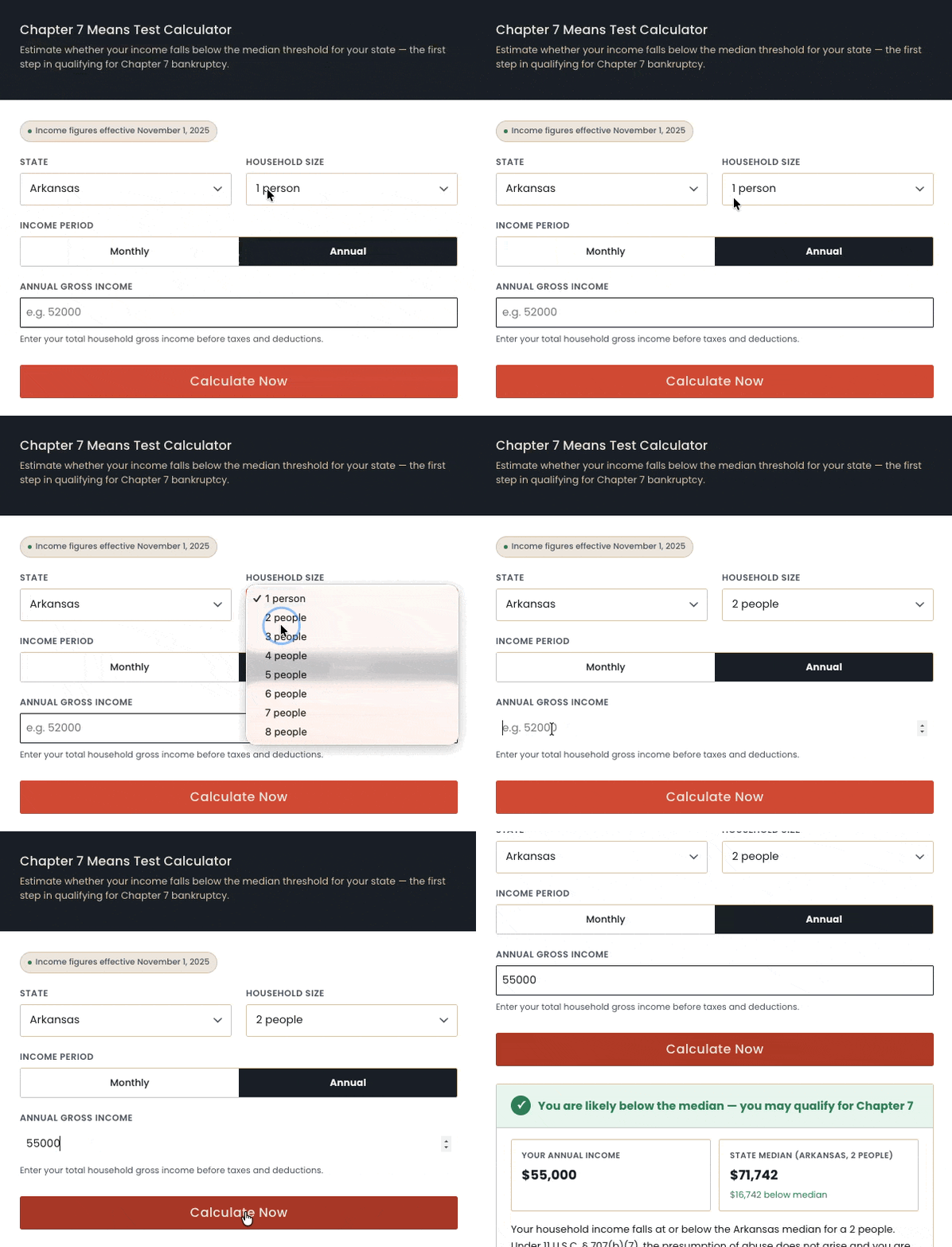
Filing for bankruptcy triggers the “automatic stay,” which immediately halts almost all collection activities, including wage garnishment. Both Chapter 7 and Chapter 13 bankruptcy can provide this protection.
Chapter 7 bankruptcy may eliminate many types of consumer debt entirely, while Chapter 13 creates a court-supervised repayment plan. An attorney can help you understand which option might work best for your situation.
Disputing the Underlying Debt
If you believe the debt itself is invalid or the amount is incorrect, you can challenge the underlying judgment. Common grounds for dispute include:
- The debt is beyond your state’s statute of limitations (time barred)
- You already paid the debt in full or made a partial payment that wasn’t credited
- The debt belongs to someone else due to mistaken identity
- The debt amount includes improper interest or fees
Send a dispute letter via certified mail with return receipt to create a paper trail of your challenge.
Employer Rights and Responsibilities During Garnishment

Understanding your employer’s role in the wage garnishment process can help you ensure they’re following the law correctly and not overstepping their authority.
What Employers Must Do
When your employer receives a valid garnishment order, they are legally required to:
- Begin withholding the specified amount from your wages according to the court’s timeline
- Continue garnishment until the debt is paid in full or they receive a court order to stop
- Send garnished funds to the creditor or designated authority as directed
- Maintain accurate records of all garnishment withholdings and payments
Employers who fail to comply with valid garnishment orders may become liable for the unpaid debt amount.
What Employers Cannot Do
Federal law provides important job protections for workers facing garnishment:
- Cannot fire you for a single garnishment: The Consumer Credit Protection Act prohibits employers from terminating employees due to one garnishment order
- Cannot discriminate: Employers cannot take adverse employment actions like demotions or reduced hours solely because of garnishment
- Cannot garnish more than legally allowed: Employers must follow federal and state limits on garnishment amounts
However, these protections have limitations. Federal law does not protect against termination for multiple simultaneous garnishments, and some states provide additional protections beyond federal requirements.
Administrative Fees
In most states, employers can charge you administrative fees for the extra work involved in processing garnishment orders. These fees typically range from $5 to $15 per pay period and are deducted from your wages in addition to the garnishment amount.
Handling Multiple Garnishments
When multiple garnishments exist simultaneously, employers must follow priority rules established by federal and state law:
- Child support typically receives the highest priority
- Tax levies often take precedence over consumer debt garnishments
- Consumer debt garnishments are usually processed in the order received
The total amount garnished from all sources still cannot exceed federal and state limits on your disposable earnings.
Protecting Your Bank Account from Garnishment
Creditors can also seek to garnish funds directly from your bank accounts, but several protections exist to safeguard essential income and preserve your ability to meet basic needs.
Federal Benefit Protections
Banks must automatically protect federal benefits from garnishment under specific circumstances:
- Two-month rule: Banks must preserve at least two months’ worth of electronically deposited federal benefits in consumer accounts
- Automatic protection: This protection applies without requiring you to file additional paperwork
- Covered benefits: Social security, SSI, veterans benefits, federal disability payments, and other federal benefits qualify
If your account contains more than two months of federal benefits, you may need to file an exemption claim to protect the additional amount.
Mixed Funds and Record-Keeping
When protected federal benefits are deposited into accounts that also receive other income, determining which funds are exempt becomes more complex. Banks typically protect funds based on the most recent deposits, but maintaining detailed records helps you prove which money should be exempt.
Keep documentation showing:
- Dates and amounts of all federal benefit deposits
- Sources of all other income deposited in the account
- Account statements showing the flow of funds
- Evidence that you rely on federal benefits for basic living expenses
Exemption Claims for Bank Accounts
If your account is frozen due to a garnishment order, you typically have 10-30 days to file an exemption claim to release protected funds. This process is similar to wage garnishment exemptions but requires you to prove which funds in the account are exempt.
Your exemption claim should include:
- Bank statements showing federal benefit deposits
- Documentation of income sources
- Proof of essential monthly expenses
- Evidence that frozen funds are needed for basic living costs
Garnishment Protection Account Features
Some banks offer specialized account features designed to help protect exempt funds:
- Separate sub-accounts for different types of income
- Automatic exemption processing for federal benefits
- Enhanced documentation to support exemption claims
While these features can be helpful, they don’t replace your responsibility to understand and assert your legal rights when facing account garnishment.
When Debt Collectors Don’t Need Court Orders

While most debt collectors must go through the court system before garnishing wages, certain types of debts allow federal agencies and some state agencies to garnish wages through administrative processes that bypass normal court requirements.
Federal Tax Garnishment
The IRS has broad authority to collect unpaid taxes through wage garnishment without obtaining a court order. However, they must still follow specific procedural requirements:
- Notice and demand: The IRS must send you a bill for unpaid taxes
- Notice of intent to levy: You must receive advance notice of the planned garnishment
- Opportunity for hearing: You have the right to request a hearing before garnishment begins
- Collection alternatives: The IRS must consider payment plans and other collection alternatives
IRS wage levies can take a much larger percentage of your income than typical consumer debt garnishments, often leaving you with only a small amount for basic living expenses.
State Tax Garnishment
Most state tax agencies have similar administrative garnishment powers for collecting unpaid state taxes and local taxes. The specific procedures vary by state, but generally follow a pattern similar to federal tax collection.
Federal Student Loan Garnishment
The Department of Education can initiate administrative wage garnishment for defaulted federal student loans without going to court. Key features of this process include:
- 15% limit: Administrative garnishment for student loans is capped at 15% of disposable pay, which is lower than the 25% federal limit for other debts
- Pre-garnishment hearing: You have the right to request a hearing before garnishment begins
- Hardship exemptions: You can claim exemptions if garnishment would cause financial hardship
- Rehabilitation options: Making consecutive on-time payments can stop garnishment and restore the loan to good standing
Child Support Enforcement
Child support agencies can often garnish wages directly without court involvement, using administrative processes established under federal and state law. These garnishments can take up to 50-60% of disposable income in some cases, significantly more than typical consumer debt garnishments.
If you need to pay child support but cannot afford the current garnishment amount, contact the child support agency to discuss modification options based on changed financial circumstances.
Getting Legal Help and Filing Complaints
When facing wage garnishment, professional legal help and knowledge of complaint procedures can be essential for protecting your rights and achieving the best possible outcome.
When to Seek Legal Help
Consider consulting with an attorney if you’re facing:
- Complex garnishment situations involving multiple creditors or types of debt
- Improper garnishment practices that violate federal or state law
- Significant financial hardship that standard exemptions don’t address
- Disputes about debt validity or the amount owed
- Potential bankruptcy as a solution to overwhelming debt
Many attorneys offer free consultations for debt-related cases and can quickly assess whether you have grounds to challenge a garnishment.
Types of Legal Assistance
Bankruptcy Attorneys: Specialize in using bankruptcy protection to halt garnishments and eliminate or restructure debts. They can explain how bankruptcy’s automatic stay immediately stops wage garnishment and whether bankruptcy makes sense for your situation.
Consumer Rights Attorneys: Focus on violations of debt collection laws and improper garnishment practices. They can help you recover damages if debt collectors have violated your rights under fair debt collection practices laws.
Legal Aid Organizations: Provide free or low-cost legal help for people who cannot afford private attorneys. Many legal aid organizations have specific programs for debt collection and garnishment issues.
Filing Complaints Against Debt Collectors
If debt collectors have violated federal or state law during the garnishment process, filing formal complaints can help stop improper practices and potentially result in financial recovery.
Consumer Financial Protection Bureau (CFPB): The federal agency responsible for enforcing consumer financial laws. File complaints online at consumerfinance.gov or by calling (855) 411-2372.
Federal Trade Commission (FTC): Enforces fair debt collection practices and can take action against companies that violate federal law. File complaints at reportfraud.ftc.gov.
State Attorney General: Many state attorneys general have consumer protection divisions that investigate debt collection violations and can take enforcement action.
State Banking Regulators: If your bank has improperly handled garnishment of protected federal benefits, file complaints with your state’s banking regulator.
Documentation for Legal Help and Complaints
Maintain detailed records of all garnishment-related communications and documents:
- All court papers related to the debt and garnishment
- Pay stubs showing garnishment amounts and calculations
- Bank statements documenting account freezes or garnishment
- Correspondence with debt collectors, creditors, and your employer
- Records of protected income like federal benefits or exempt earnings
- Evidence of financial hardship caused by improper garnishment
This documentation provides the foundation for legal challenges and complaint investigations.
Key Takeaways
Understanding your rights regarding wage garnishment empowers you to take effective action when debt collectors threaten your income. Remember these essential points:
- Debt collectors must follow a strict legal process and obtain court orders before garnishing wages for consumer debts
- Federal law limits garnishment to 25% of disposable income or income above $217.50 per week in 2024
- Many types of income, including social security benefits and veterans benefits, are protected from garnishment
- You have the right to challenge improper garnishments through exemption claims and hardship hearings
- Certain federal debts like unpaid taxes and student loans can bypass normal court requirements
- Banks must automatically protect federal benefits, and you can take additional steps to safeguard your account
- Legal help is available through attorneys, legal aid organizations, and government complaint processes
The key to protecting yourself is understanding your rights and acting quickly when facing garnishment. Don’t let fear or confusion prevent you from asserting the protections that federal and state laws provide.
Conclusion
Knowledge is your most powerful tool when debt collectors threaten to garnish your wages. While wage garnishment is a real possibility for unpaid debt, federal laws provide significant protections that many people don’t fully understand or utilize.
The legal requirements debt collectors must meet, the income protections available to you, and the steps you can take to challenge improper garnishment all work together to ensure that wage garnishment doesn’t leave you unable to meet your basic living needs.
Don’t wait until garnishment papers arrive to understand your rights. If you’re facing debt collection or have already received garnishment notices, take action immediately to protect your income and explore all available options. Whether that means filing exemption claims, negotiating payment plans, seeking legal help, or considering bankruptcy protection, you have more power than you might realize to control the outcome.
Remember: debt collectors are required to follow the law, and when they don’t, you have recourse through both the court system and federal complaint processes. Document everything, know your rights, and don’t hesitate to seek professional help when you need it.