

Introduction
Filing Chapter 7 bankruptcy represents both a powerful debt relief tool and a significant financial decision with lasting consequences. Understanding the pros and cons of filing Chapter 7 helps individuals overwhelmed by debt make an informed decision about whether this legal process offers the right path to financial recovery.
Chapter 7 bankruptcy, also known as liquidation bankruptcy, can eliminate most unsecured debts within just a few months while providing immediate relief from creditor harassment and collection actions. However, this bankruptcy option also carries substantial drawbacks including long-term credit impact and potential asset loss.
What This Guide Covers
This comprehensive analysis covers the specific advantages and disadvantages of Chapter 7 bankruptcy filing, eligibility requirements through the means test, and practical considerations for decision-making. We focus exclusively on Chapter 7 rather than detailed comparisons with other bankruptcy chapters or alternative debt relief options.
Who This Is For
This guide is designed for individuals struggling with overwhelming financial burdens considering bankruptcy as a solution. Whether you’re facing aggressive creditor phone calls and collection actions or have been advised by a qualified bankruptcy attorney to consider filing, you’ll find expert guidance to evaluate if Chapter 7 matches your financial situation.
Why This Matters
Making the wrong decision about filing for bankruptcy can worsen your financial future rather than providing the fresh start you need. Credit counseling from an approved agency is a legal requirement before filing Chapter 7 bankruptcy. It is important to carefully weigh all factors before making your final decision to file. Chapter 7 bankruptcy stays on your credit report for 10 years and becomes part of the public record, making it crucial to understand both benefits and risks before proceeding with any bankruptcy filing.
What You’ll Learn:
How Chapter 7 bankruptcy can eliminate debt through the legal process
Specific advantages including automatic stay protection and debt discharge
Major disadvantages including credit impact and asset liquidation risks
Eligibility requirements and qualification through the means test
Practical steps for determining if Chapter 7 is right for your situation
Understanding Chapter 7 Bankruptcy
Chapter 7 bankruptcy is a liquidation bankruptcy that eliminates most unsecured debts through a court-supervised legal process administered by a bankruptcy trustee.
Under the bankruptcy code, Chapter 7 provides a financial fresh start by discharging qualifying debts such as credit card debt, medical bills, personal loans, and other unsecured debts. The automatic stay immediately halts all creditor collection activities, providing immediate relief from overwhelming financial pressures.
The entire process typically takes just a few months from initial bankruptcy filing to final bankruptcy discharge, making it significantly faster than repayment plans or other debt relief alternatives. Most clients struggle with debt for years before discovering that Chapter 7 can provide a clean slate in a relatively short timeframe.
How Chapter 7 Differs from Other Options
Chapter 7 liquidation bankruptcy differs fundamentally from Chapter 13 bankruptcy, which requires a three-to-five-year repayment plan with monthly payments to repay creditors partially (this structured payment plan is a key feature of Chapter 13 bankruptcy). Unlike debt settlement or debt consolidation programs that negotiate with most creditors individually, Chapter 7 provides comprehensive legal protection through the bankruptcy court.
This distinction matters because Chapter 7 offers more complete debt elimination without ongoing monthly payments, though it may involve surrendering nonexempt property. Understanding these differences helps evaluate whether Chapter 7’s pros and cons align with your specific financial affairs and goals.
The Bankruptcy Trustee’s Role
The bankruptcy trustee reviews your financial situation and may liquidate non exempt assets to repay creditors according to bankruptcy code priorities. Certain assets, if not protected by exemptions, may be sold to pay creditors as part of the bankruptcy process. However, bankruptcy exemptions protect most property that people need for daily life, including homes, vehicles, bank accounts, and household goods within specified limits. This means certain property is protected from liquidation, ensuring you retain essentials and necessities.
This connects to the main advantages and disadvantages of Chapter 7 because while most filers keep all their property through exemptions, those with significant nonexempt property face potential asset loss as part of the liquidation process. Understanding which property qualifies as non exempt property is crucial to avoid losing property during bankruptcy.
Transition: Understanding how Chapter 7 works provides essential context for evaluating its specific advantages for debt elimination and financial recovery.
Major Advantages of Filing Chapter 7 Bankruptcy
Building on the foundational understanding of Chapter 7 as liquidation bankruptcy, the specific benefits make this bankruptcy option attractive for individuals facing insurmountable debt loads and aggressive creditor actions.
Immediate Protection Through Automatic Stay
The automatic stay begins the moment your qualified bankruptcy attorney files your case with the bankruptcy court, instantly stopping all collection actions. This legal protection halts wage garnishments, foreclosure proceedings, repossession attempts, and harassing phone calls from creditors seeking payment.
Unlike other debt relief approaches that require negotiations with individual creditors, the automatic stay provides immediate relief across all debts simultaneously. This comprehensive protection gives you breathing room to focus on the bankruptcy process rather than constantly fielding creditor demands.
For individuals facing imminent foreclosure, repossession, or garnishment, this immediate protection often represents the primary motivation for filing bankruptcy rather than pursuing alternative options.
Fast and Complete Debt Discharge
Chapter 7 eliminates most unsecured debts permanently within four to six months, providing debt relief far more quickly than debt management plans or settlement programs. Credit card debt, medical bills, personal loans, and many other debts receive a complete bankruptcy discharge without requiring any repayment.
Over 95% of Chapter 7 cases result in successful discharge, making it highly reliable for debt elimination. Once your debts are discharged, you are no longer legally required to pay those debts. This comprehensive approach eliminates debt entirely rather than restructuring payment terms or reducing balances through negotiations.
The speed advantage proves particularly valuable for individuals whose financial situation continues deteriorating while pursuing alternative debt relief methods that may take years to complete.
Ability to Keep Most Property
Despite being called liquidation bankruptcy, over 95% of Chapter 7 filers keep all their property through state and federal exemption protections. These exemptions typically cover your home (up to specified equity limits), essential vehicles, household goods, clothing, and retirement accounts.
Bankruptcy exemptions protect the assets most people need to maintain their standard of living and employment, ensuring that filing Chapter 7 doesn’t leave you destitute. The exemption system recognizes that effective debt relief requires preserving the tools necessary for financial recovery.
Most individuals discover that their concerns about losing property prove unfounded once they understand how exemptions apply to their specific assets and equity levels.
Fresh Start for Future Financial Health
Eliminating monthly payments on discharged debts frees up significant disposable income for covering current living expenses and building emergency savings. This immediate cash flow improvement often provides more financial stability than individuals have experienced in years.
Credit rebuilding can begin immediately after your bankruptcy discharge, and many people find they can start rebuilding their credit right away. In fact, some individuals are able to obtain credit immediately after discharge, though often at higher interest rates. The psychological benefits of eliminating overwhelming debt often prove as valuable as the practical financial improvements.
Chapter 7 removes the constant stress of unmanageable debt loads, allowing you to focus energy on rebuilding your finances rather than managing creditor demands.
Transition: While these advantages make Chapter 7 attractive, understanding the significant disadvantages is equally important for making a balanced decision.
Significant Disadvantages of Chapter 7 Filing
The powerful benefits of Chapter 7 bankruptcy come with substantial costs and limitations that can impact your financial future for years beyond the discharge date.
Long-Term Credit Impact
Chapter 7 bankruptcy stays on your credit report for 10 years from the filing date, representing one of the most negative entries possible for credit scoring. Individuals with good credit before filing often experience dramatic credit score drops of 200 points or more initially.
Higher interest rates on future loans, credit cards, car loans, and mortgages become standard for several years after discharge. Many lenders automatically reject applications from recent bankruptcy filers, while others offer credit only with significant restrictions and elevated rates.
The credit impact extends beyond borrowing to affect rental applications, employment screening, insurance rates, and the security deposit required for renting an apartment or setting up utility services. Some employers in financial services or positions requiring security clearances may view bankruptcy filing as disqualifying.
Recovery typically takes two to four years of careful credit rebuilding to achieve reasonable interest rates, though the bankruptcy notation remains visible throughout the full 10-year period.
Income-Based Eligibility Restrictions
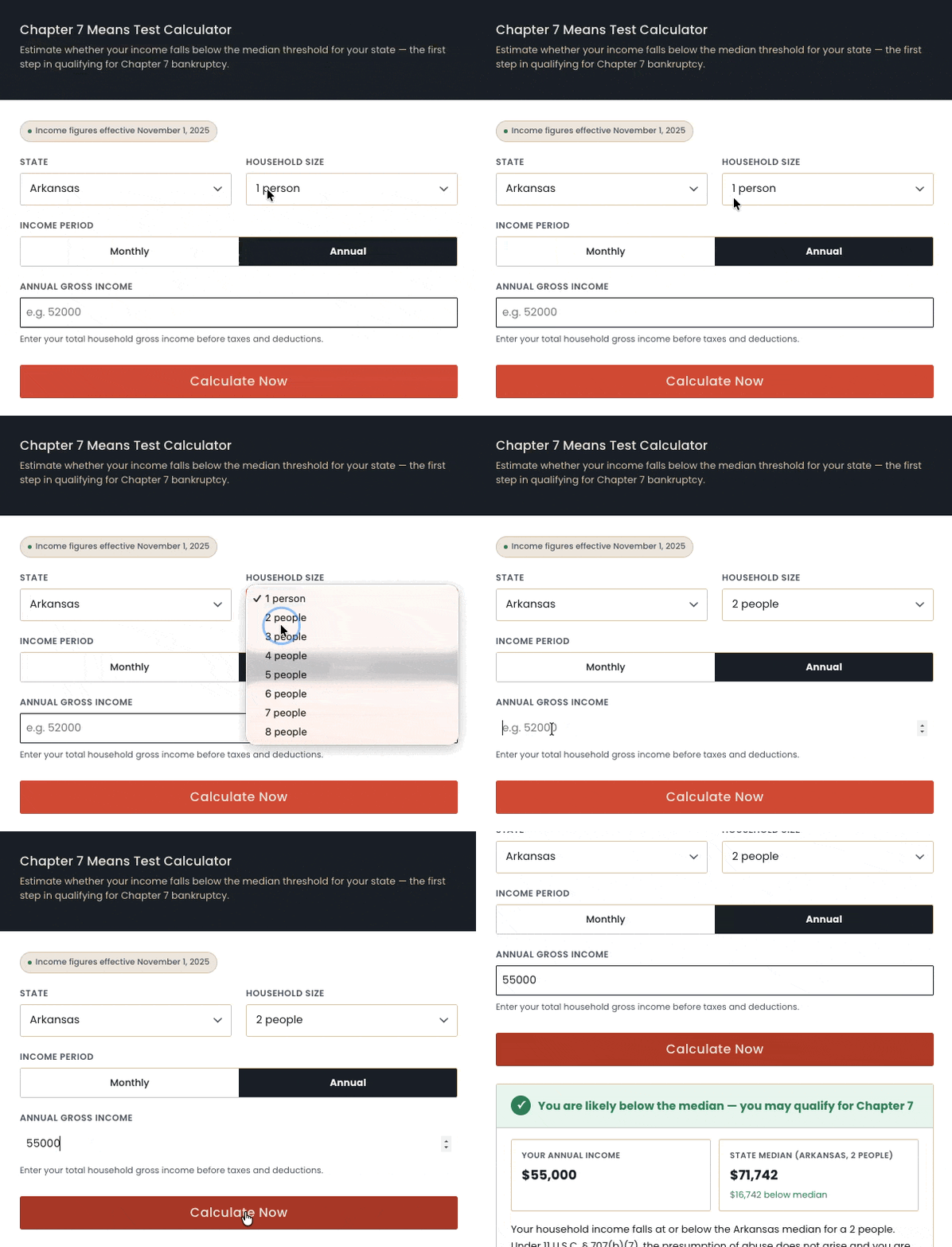
The means test prevents many individuals from accessing Chapter 7 despite overwhelming debt loads. If your income exceeds your state’s median income for your household size, you must demonstrate limited disposable income after allowed expenses to qualify for Chapter 7.
High earners often find themselves forced into Chapter 13 repayment plans regardless of their preference for Chapter 7’s faster debt elimination. The means test calculations include income from the six months before filing, potentially disqualifying individuals whose income has recently increased.
Previous bankruptcy filings create additional waiting periods, with eight years required between Chapter 7 discharges and six years between Chapter 13 and Chapter 7 filings. These restrictions prevent using bankruptcy repeatedly as a debt management strategy.
Income fluctuations from seasonal employment, commission-based work, or irregular business income can complicate means test calculations and timing decisions.
Limited Debt Discharge Coverage
Student loans remain largely nondischargeable in Chapter 7 except in rare cases where filers can prove undue hardship through a separate court proceeding. This limitation leaves many individuals with their largest debt burden intact after bankruptcy.
Child support, alimony, recent income taxes, and certain debts continue despite bankruptcy discharge. Secured debts like mortgages and car loans remain tied to the underlying collateral, requiring continued payments to retain the property.
Certain fraudulent debts, criminal fines, and debts arising from willful misconduct cannot be eliminated through Chapter 7. If these excluded debts represent a significant portion of your total debt load, Chapter 7 may provide limited actual relief.
Co-signers remain fully liable for discharged debts, potentially damaging relationships with family members or friends who guaranteed your obligations.
Potential Asset Loss and Other Risks
Individuals with valuable non exempt assets face liquidation by the bankruptcy trustee to repay creditors partially. High-value vehicles, investment accounts, real estate equity beyond exemption limits, and collectibles may be sold.
The bankruptcy filing becomes part of the public record, accessible to anyone conducting background checks. While most people never experience practical consequences from public access, the loss of financial privacy concerns some individuals.
Filing fees of $338 plus attorney fees create upfront costs that cash-strapped individuals may struggle to afford. However, many bankruptcy attorneys offer payment plans or reduced fees for qualifying individuals.
The legal process requires extensive documentation of your financial affairs, income, assets, and recent financial transactions, demanding significant time and emotional energy during an already stressful period.
Transition: Understanding these challenges helps identify specific obstacles you may face and strategies for addressing them effectively.
Common Challenges and Solutions
These are typical obstacles people encounter when considering Chapter 7 bankruptcy and practical approaches for addressing each concern.
Challenge 1: Determining Qualification Under Means Test
Solution: Calculate your state’s median income for your household size and compare it to your average monthly income over the past six months, then complete the official means test forms if above median income.
Consider timing your bankruptcy filing if your income fluctuates seasonally or you expect income changes that could affect qualification.
Challenge 2: Protecting Valuable Assets from Liquidation
Solution: Research both state and federal exemption options in your jurisdiction, as some states allow choosing between systems while others mandate specific exemptions.
Consult with a qualified bankruptcy attorney about legitimate exemption planning strategies and timing considerations that could maximize property protection.
Challenge 3: Managing Credit Rebuilding After Discharge
Solution: Begin credit rebuilding immediately after discharge with secured credit cards, becoming an authorized user on family member accounts with good payment history, and monitoring your credit report for accuracy.
Focus on establishing positive payment history rather than maximizing available credit initially, as responsible credit use over time rebuilds scores more effectively than multiple new accounts.
Transition: With a clear understanding of Chapter 7’s advantages, disadvantages, and common challenges, you can now evaluate whether this bankruptcy option aligns with your specific financial situation and goals.
Conclusion and Next Steps
Chapter 7 bankruptcy offers powerful debt relief through comprehensive elimination of most unsecured debts within just a few months, but requires accepting long-term credit consequences and potential asset loss. The decision to file ultimately depends on weighing your specific financial situation against both the immediate benefits and lasting costs outlined in this analysis.
For individuals with primarily unsecured debt loads that exceed their ability to repay within reasonable timeframes, Chapter 7 often provides the most effective path to a financial fresh start. However, those with significant student loans, recent tax debts, or valuable nonexempt property may find the benefits more limited.
To Get Started:
Complete the means test calculation using your state’s median income figures and your recent income history
Schedule a free consultation with an experienced bankruptcy attorney to review your specific situation
Gather comprehensive documentation of your income, assets, debts, and recent financial transactions
Related Topics: Chapter 13 bankruptcy provides an alternative for high earners who don’t qualify for Chapter 7, while debt settlement and consolidation offer non-bankruptcy options for those seeking to avoid the public record and credit impact of filing bankruptcy.