

The Cabot, AR, Student Loan Bankruptcy Firm You Want On Your Side
Cabot, Arkansas – Student Loan Relief Options with WH Law
Student loan debt isn’t just a line on your credit report. It’s the reason part of your hard-earned paycheck disappears, your credit score stays in the gutter, and your dreams keep getting put on hold. And here in Arkansas, it’s hitting harder than ever.
If you’re feeling buried under the burden of student loans, you’re not alone (and you’re not weak either). You might be thinking, “There has to be more to life than paying bills and never having anything left over for fun, right?” Damn right there is.
At WH Law, we help folks in your shoes every day: people who went to school to better their future and got shackled with crippling debt instead. If student loans are wrecking your finances, sabotaging your peace, or both, it’s time to do something about it.
And if bankruptcy is the tool you need to breathe easy again, our team will help you use it in a way that benefits you. If it’s not, we’ll help you find something else that works.
You were made for more than chronic stress and survival mode. Ready to finally get your life back? Reach out to us today for a free consult.
Can You File Bankruptcy on Student Loans in Cabot, Arkansas?
Short answer? Yes, but it’s complicated and only applies to certain cases. You need to know which rules apply to you to know if you could qualify.
There’s a long-standing myth that student loans can’t be discharged through bankruptcy. While that used to be the case, it’s simply not true anymore. Things are changing, and people in Arkansas are finally starting to get real relief (you included).
To wipe out student loans through bankruptcy, you typically have to prove undue hardship. That means showing the court that:
- You can’t maintain a minimal standard of living while paying your loans
- Your situation isn’t likely to change anytime soon
- You’ve made a “good faith” effort to repay what you can
Even if your bankruptcy is approved, discharge is not automatic. But it’s also not impossible, especially with the right legal team in your corner. Our WH attorneys can help you prove all of the above and ensure you file your adversary proceeding properly.
How To Discharge Student Loans: Bankruptcy Options You Have
There’s more than one way to tackle your student debt, and bankruptcy can play a powerful role in getting you back on track financially. If you decide to go the bankruptcy route, you’ll have to file for either Chapter 7 or Chapter 13.
Here’s a breakdown of how each process works:
Chapter 7: A Fresh Start (If You Qualify)
Chapter 7 bankruptcy — sometimes called “straight bankruptcy” — is the kind that wipes out your qualifying debt entirely. It’s built for folks who just don’t have the income to reasonably pay things back on time. Once your case is approved, you’ll get a clean slate (and your creditors get told to back off).
It can erase most unsecured debt, free up your monthly budget, and, again, shut down creditor harassment.
While federal student loans are harder to discharge, Chapter 7 can still give you breathing room, especially if we can prove undue hardship. At the very least, it clears out other debt so you can finally make a dent in your loans.
Chapter 7 is one of the fastest and most efficient paths to debt relief. In most cases, discharge typically takes 6 months or less.
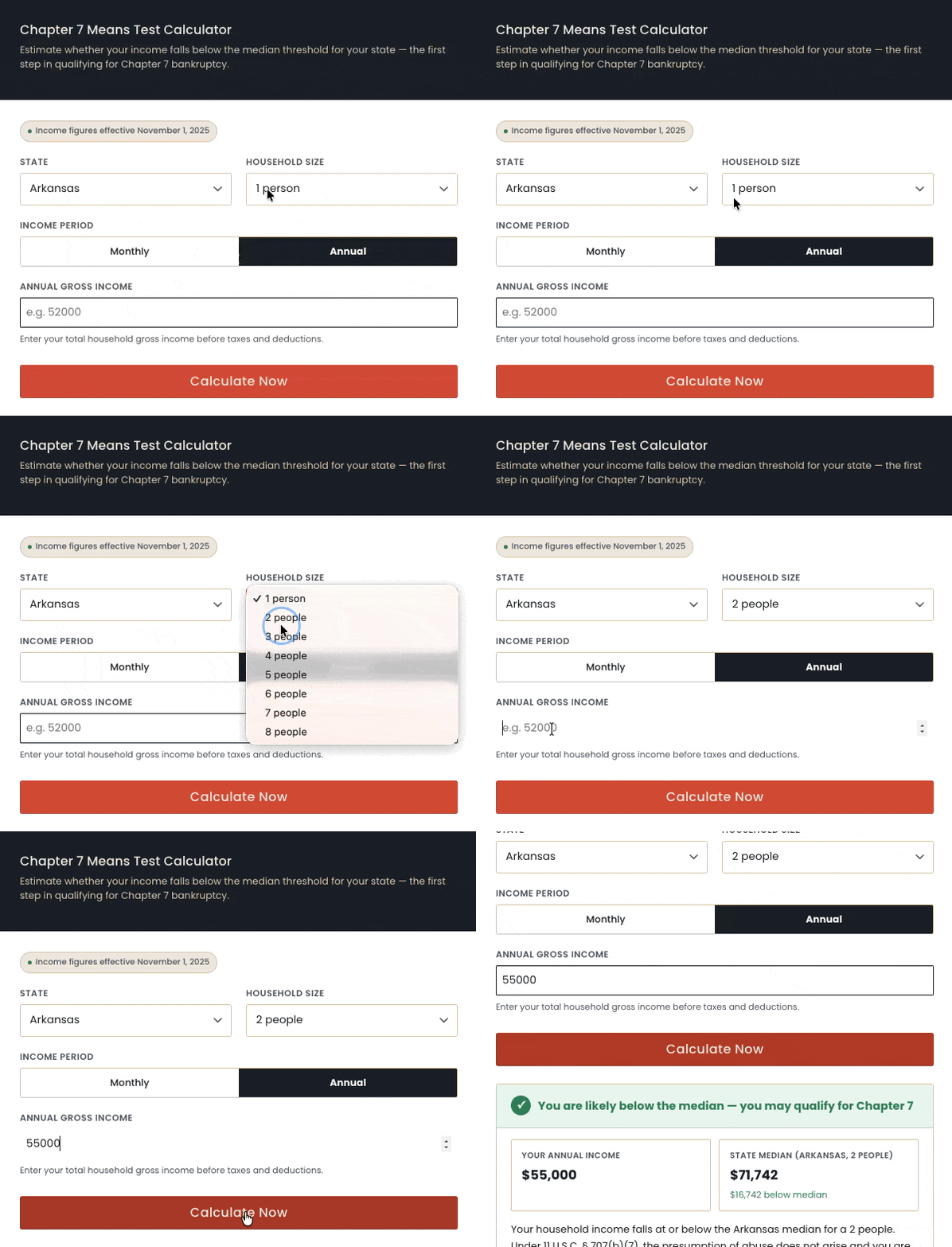
Want to see if you qualify? Learn about passing the means test and more from our Chapter 7 Lawyers in Cabot, AR.
Chapter 13: A Court-Approved Payment Plan
Not everyone qualifies for Chapter 7 bankruptcy (typically if you make too much money or fail the means test). If you earn a steady income but your loan payments are still too much to handle, Chapter 13 could be a better fit. This plan helps you reorganize your debt into one manageable monthly payment over 3 to 5 years.
Bonus? It halts collections and wage garnishments instantly, giving you space to breathe and regroup.
Two things to note:
- For Chapter 13, you must prove that you have enough money coming in (after deducting necessary living expenses and secured debt payments) to make regular payments.
- Student loan collections might hit pause, but interest? Not so much. That keeps growing while you’re busy paying off the debts that the court says come first.
What Kinds of Student Loans Can Be Discharged?
Not all student loans play by the same rules. While both federal and private student loans can be discharged in bankruptcy, the process is a bit more complex than discharging other debts. Here’s why:
Federal Student Loans
These are the ones backed by the government, such as Stafford loans, Direct Subsidized or Unsubsidized, Parent PLUS loans, etc.
Historically, federal student loans have been very difficult to discharge. As stated above, courts required you to prove “undue hardship,” which meant showing you couldn’t maintain a basic standard of living, and that your situation wasn’t likely to change, and that you’d made honest efforts to repay. Basically, it was a nightmare.
But that’s changing. As of late 2022, the Department of Justice introduced new guidelines that make it easier and more consistent for borrowers to seek a federal student aid discharge. Now, courts are encouraged to use a standardized process that takes your finances, expenses, and future outlook into account, rather than treating you like you’re trying to pull a fast one.
Still hard? Yes. But are federal student loans bankruptcy cases more possible than they used to be? Definitely.
Private Student Loans
These are loans from banks, credit unions, or private lenders like Sallie Mae or SoFi. They’re not backed by the federal government, and they’re often easier to challenge in bankruptcy (especially if the loan didn’t go directly toward tuition at an accredited institution).
Some private loans aren’t actually considered “qualified education loans” under the common bankruptcy code. That means they don’t get the same protection as federal loans. We’re talking about things like:
- Loans for unaccredited schools
- Bar study loans
- Loans that went to cover living expenses, not classes
- Loans that exceeded the school’s cost of attendance
In these cases, we may not even have to prove undue hardship. We can argue that the loan doesn’t meet the legal standard and should be treated like any other unsecured debt. That opens the door to a full discharge.
Bottom line: Federal loans are harder to discharge but not impossible, especially with recent legal changes. Private loans? Often more flexible, and in some cases, fully dischargeable without jumping through as many hoops.
What If You’re Already Behind on Payments?
Debt delinquency is actually more common than you might think. Millions of Americans are behind on their student loans. If you are, too? That doesn’t make you a failure.
Whether you’re 30 days late or deep in default, these options might still be on the table:
- Forbearance or deferment to temporarily pause payments
- Loan rehabilitation to get out of default
- Consolidation to roll your loans into one doable payment
- Switching repayment plans to match your income
- Bankruptcy to reorganize or (in some cases) discharge your loans
If all that’s making your head spin, take a breath: You’re not in this thing alone. The last thing you need is more stress and legal confusion. Let us wrangle the paperwork, the lender BS, and the never-ending phone calls while you focus on getting your life back. We’ve got the rest.
Do You Qualify for Bankruptcy?
There’s no shame in asking this question or needing help. Honestly, a lot of folks qualify and file for bankruptcy. It’s just not something most people talk about openly.
A few signs you might be a good candidate?
- You’re buried in medical debt from an emergency or a long-term illness.
- You’re dealing with the financial fallout of a recent divorce.
- You’ve lost your job or seen a serious drop in income.
- Credit card bills keep piling up, no matter how much you pay.
- You’re upside down on a car loan or struggling to keep up with mortgage payments.
If any of that sounds familiar, it might be time to explore your bankruptcy options. You might be eligible for Chapter 7 if your income is below a certain threshold or Chapter 13 if you have a reliable income and just need help reorganizing your debt. In both cases, you’ll get relief from collections the second your case is filed (thanks to the automatic stay).
We’ll start by helping you understand what you qualify for and which path makes the most sense for your situation.
If the court agrees that you’re a solid candidate for bankruptcy? You could walk away with a full discharge of your student loans. In some cases, only a portion is wiped out. And sometimes, the terms are changed to make repayment more manageable. No matter what, it’s a hell of a lot better than staying stuck.
Not Just Bankruptcy: Student Loans Can Be Tackled Through Other Legal Tools
Even if bankruptcy isn’t your golden ticket, there are still legit ways to get relief from student loan debt, such as:
- Income-Driven Repayment (IDR) plans
- Public Service Loan Forgiveness (PSLF)
- Negotiation or settlement, especially for private loans
- Deferment or forbearance, when life gets unexpectedly hard
- Discharge for disability or school misconduct (if they lied to you, misled you, or broke certain laws)
At WH Law, we don’t just help you file bankruptcy, as it’s typically a last resort. We help you fight smarter with every tool available.
How WH Law Fights for Private and Federal Student Loan Debt Relief
We’re not here to talk down to you or toss you another brochure full of exhausting information. We’re here to roll up our sleeves and go to work — for you.
When you team up with WH Law, you get clear options, transparency about what’s worth pursuing, help handling paperwork, applications, negotiations, and support that actually feels like support.
Our lawyers are passionate about fighting for the important things in life, and honestly, what’s more important than your future? Your peace of mind? Your financial freedom?
At the end of the day, we’re not just fixing a student loan problem and calling it a day. We’re helping you take your life back. Whether we’re challenging a shady private lender or helping you fight for a federal loan discharge, we’ve got your back every damn step of the way.
Signs It’s Time To Call a Lawyer
Still not sure if you should reach out? If you’re dealing with any of these situations, it’s probably time:
- You’re facing wage garnishment.
- Your loans are at risk of default or already in it.
- You’re confused by forgiveness programs or repayment plans.
- You’ve tried handling it yourself and hit a wall.
- You’re wondering if bankruptcy might help.
- You’re tired of being harassed by your creditors.
- You’re having a hard time getting in touch with your student loan servicer.
The good news? You don’t have to wait until things fall apart to get help. In fact, the sooner you talk to us, the more we can do for you.
Talk to a Cabot Bankruptcy Attorney Today
You’ve carried this debt long enough. You don’t need more forms or late-night meltdowns. You need a fighter. Someone who sees the human behind the balance and genuinely cares about where you go from here.
If you’re tired of feeling overwhelmed, stuck, or just plain exhausted, it’s time to let someone else shoulder the weight for a while. That’s us. Let’s figure this out — together.
To determine if you can discharge student loan debt, talk to a Cabot Bankruptcy Attorney today or book an appointment through our website in seconds.
Relief might be just one conversation away.